When an AI response is mostly useful but partly wrong, broad feedback is expensive. “Try again” discards good work. “Fix the security section” still leaves the assistant guessing which claim failed and why.
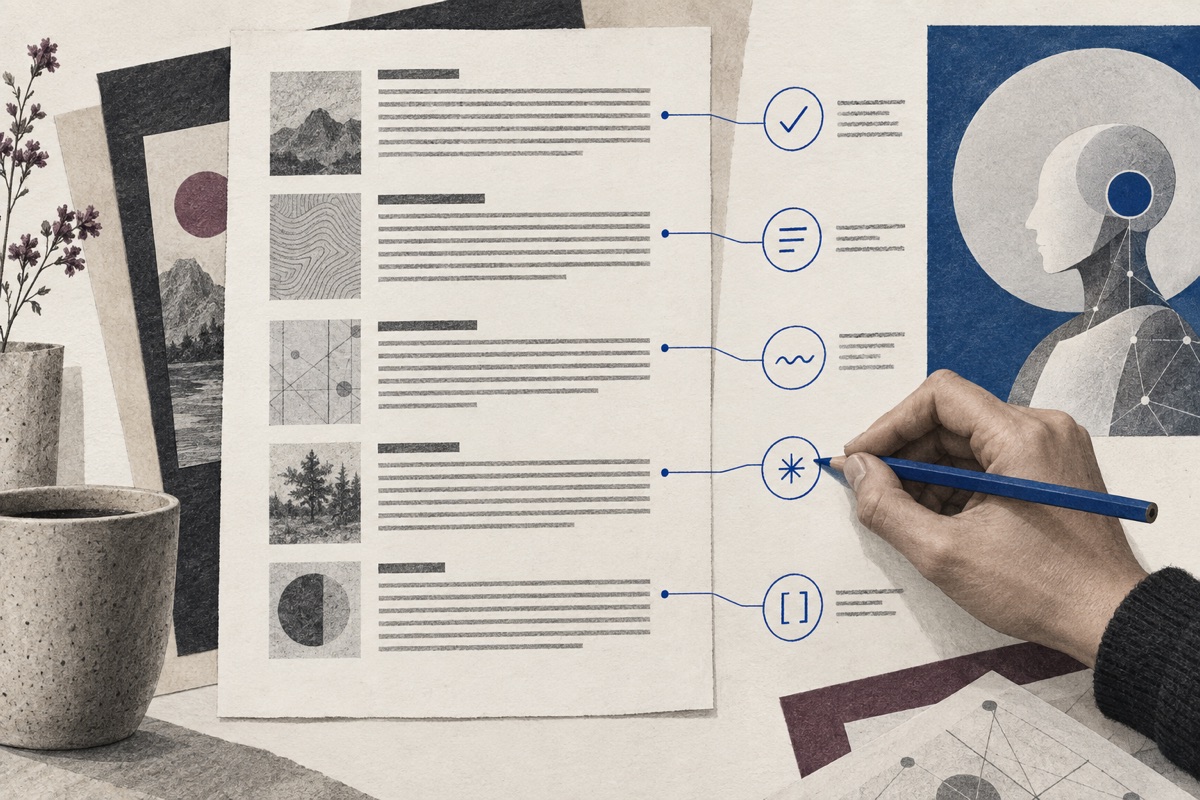
Passage-by-passage feedback gives every judgment an address. It lets you preserve one recommendation, challenge another, request an explanation beside a third, and return all of that context in one prompt.
Feedback needs an address
A useful follow-up has two parts: the Source you reacted to and the Thought it caused. Remove the Source and the Thought becomes ambiguous. Remove the Thought and the quoted passage has no instruction.
This relationship matters more as answers become longer. A detailed response may contain dozens of independent claims. Treating the answer as one object hides where your confidence changed.
Choose the smallest meaningful passage
Attach feedback to the whole paragraph, list item, heading, or code block that expresses the idea. Avoid selecting a few words when the claim depends on the rest of the sentence. The next model needs enough context to understand the point.
If one Thought applies to several consecutive passages, group those Sources. For example, a Comment about missing rollback behavior may belong to the deployment step, the database migration, and the cleanup instruction together.
- Use a paragraph for one explanatory claim.
- Use a list item for one proposed action.
- Use a code block when the concern is implementation behavior.
- Group Sources when one judgment depends on their relationship.
- Keep unrelated concerns as separate Thoughts.
Match the feedback to your intent
A Reaction communicates direction quickly. Love and Agree preserve useful work. Challenge asks the assistant to reconsider a claim. Explain asks for a clearer relationship. Concern identifies risk. A Comment adds the exact condition or question in your own words.
Combining them makes the next task clear. A Concern beside a deployment step plus “Define the rollback trigger and maximum acceptable downtime” is much more actionable than “This seems risky.”
Return one ordered review
Passage-level feedback should not become six disconnected messages. Collect the Thoughts, keep them in Source order, and send one Follow-up Prompt. The original progression helps the assistant understand dependencies between early assumptions and later recommendations.
This also makes the learning slope visible to you. You can see where comprehension was easy, where it slowed, and which missing link affected everything after it.
- Preserve the useful direction before listing changes.
- Quote each relevant Source.
- State the Reaction or exact Comment beside it.
- Ask the assistant to address actionable points one by one.
- Request an updated overall recommendation if the direction changes.
Good feedback does not need to be long. It needs to remain attached. Give each judgment a Source, then let one ordered follow-up carry the complete review.